Biological Age Assessment With Connected, Physician-Led Clinical Context
Biological age asks how a patient's body is functioning compared with what chronological age alone would suggest. A good answer depends on many inputs, from laboratory trends and medical history to genomics and daily activity.
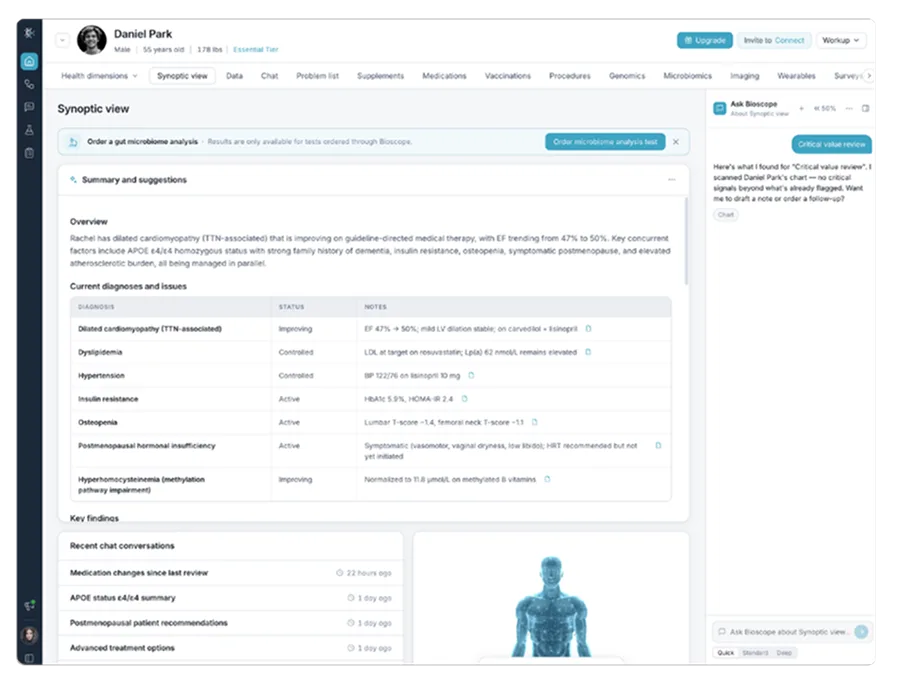
Bioscope.ai brings records, labs, genomics, microbiome and wearable data into one physician-facing view. It shows the evidence behind each output and leaves interpretation, planning and patient communication to you.
What Biological Age Means in Clinical Review
Biological age describes the idea that two patients of the same chronological age can differ meaningfully in physiological condition. One may show favorable cardiometabolic markers, stable kidney function and good activity patterns. Another may show early changes across several systems. For physicians focused on prevention and longevity, the concept is useful because it shifts attention from the calendar to the patient's measurable state.
In practice, no single number captures this fully. Different approaches draw on different inputs, and each has its own assumptions and limits. A meaningful view of aging usually depends on reading many signals together. These signals include biomarker levels and trends, medical history, medications, symptoms, lifestyle, inherited characteristics and, where available, microbiome findings.
The difficulty is that these signals rarely arrive together. Laboratory reports, genomic results, wearable data and clinical notes often sit in different systems and formats. Before any judgment about biological aging can begin, the physician has to reconstruct the patient picture manually.
Bioscope.ai is designed to reduce that reconstruction work. The platform brings available patient information into one organized record. Physicians can then review the inputs behind an assessment of biological age side by side, instead of moving between portals and documents.
The platform does not decide what a patient's biological age is or what it means. It organizes the information and connects outputs to supporting evidence where provided. Interpretation, diagnosis and care decisions stay with the physician.
Review Aging Signals by Clinical Dimension, Not Data Source
Aging rarely shows up in one organ system at a time. Changes may appear across cardiovascular, metabolic, renal, hepatic, immune, gastrointestinal and neurocognitive health, often at different rates.
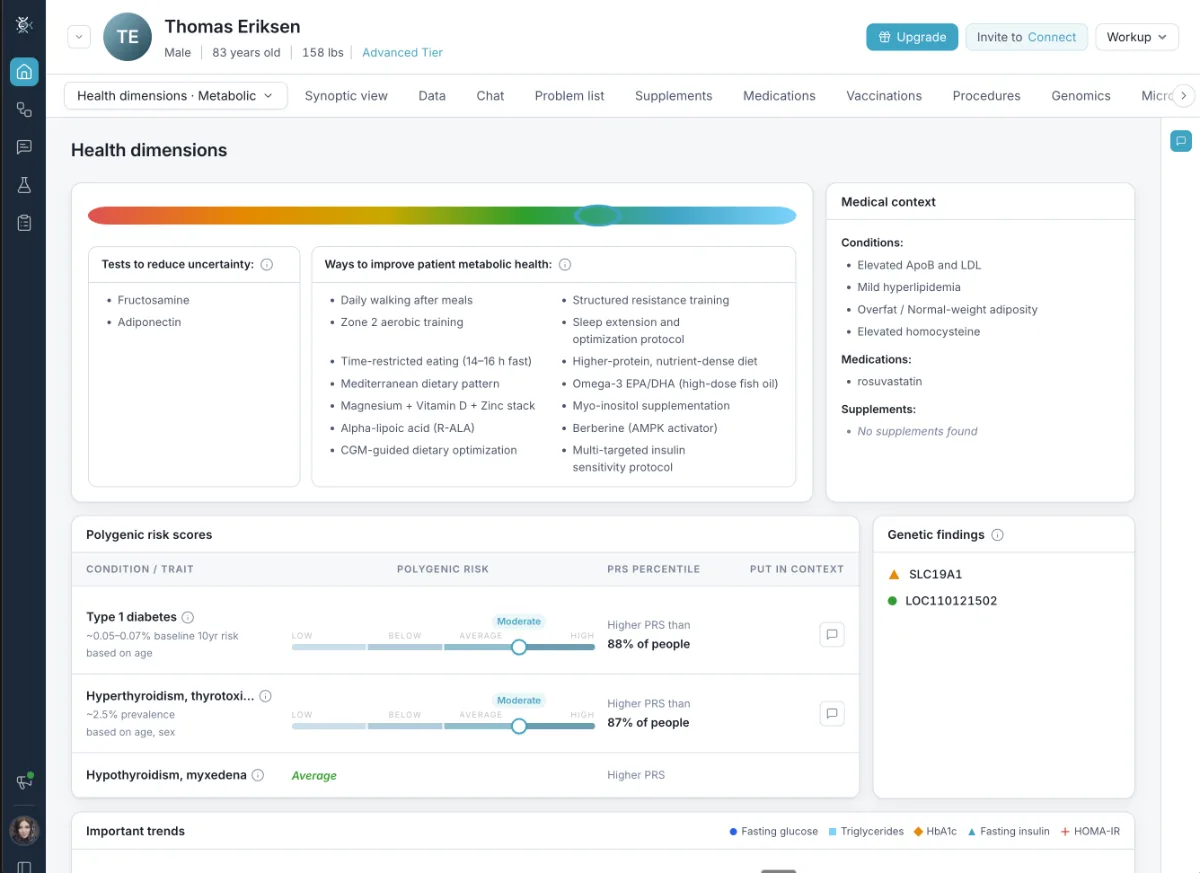
The Bioscope.ai Synoptic Dashboard organizes available patient information across 15 health dimensions. Visual indicators give an at-a-glance view of areas that may deserve closer attention. From the summary, physicians can move into relevant metrics, records, medical images and supporting science.
This changes the starting point of a biological age conversation. The physician does not have to read each lab panel or report in isolation. Instead, they can look at what the combined information may suggest within a specific dimension and where the patient's picture appears uneven.
The dashboard is a navigation aid. It does not provide a diagnosis or replace qualified clinical interpretation.
Place Genomic Risk Alongside Current Physiology
Inherited characteristics can shape how a patient ages, but genetic findings describe predisposition, not current physiological state. They are most useful when read next to present-day evidence.
Eligible Bioscope.ai tiers include Bioscope-ordered 30x whole-genome sequencing and advanced polygenic risk scores. Physicians can review eligible genomic information alongside laboratory findings, medications, history and other available context. Genomic data then becomes part of the broader assessment rather than a standalone report.
Advanced polygenic risk scores provide population-calibrated estimates across supported conditions. They are not diagnoses and do not predict an individual outcome. A higher estimate may prompt a closer look at a related dimension, but its relevance depends on the patient's clinical and personal circumstances.
The physician decides how much weight genomic context deserves for each patient.
Integrate Microbiome and Multi-Omic Data Responsibly
Microbiome findings can add another biological layer to a longevity review. This is particularly true when gastrointestinal symptoms, inflammatory markers or metabolic patterns are already part of the picture.
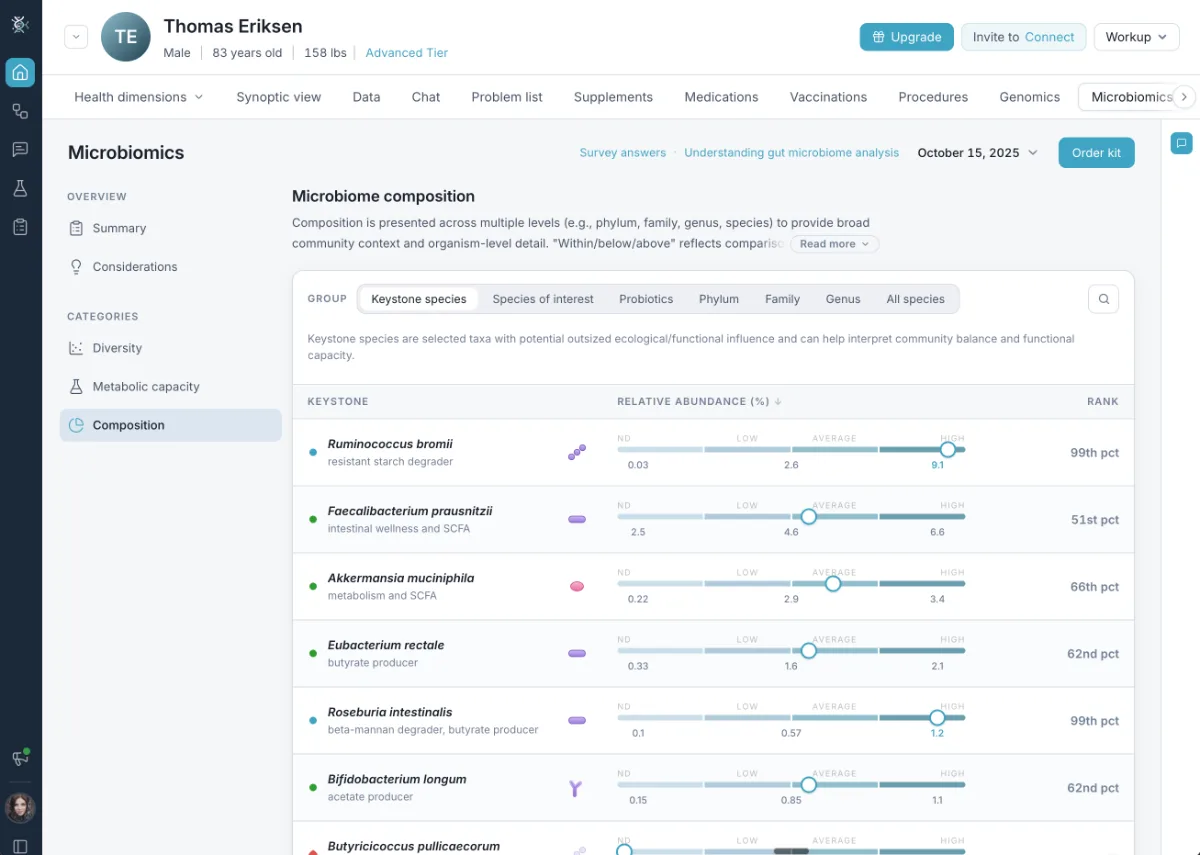
Eligible platform tiers support microbiome testing and analysis. Bioscope.ai can integrate, analyze and visualize eligible Bioscope-ordered genomics and microbiome data within the same organized framework as the rest of the record.
Third-party omics reports can also be uploaded for contextual use in AI chat. These reports remain separate from the dedicated Bioscope omics-analysis tabs. As a result, uploaded results are not presented as if they had received the same platform-specific processing.
Microbiome and multi-omic findings, like genomic results, are not standalone conclusions about how a patient is aging. They are inputs for structured physician review.
Align AI Support With How You Assess Aging
Physicians approach biological aging differently. Some emphasize cardiometabolic markers, while others give more weight to inflammation, body composition or functional measures. Evidence standards also vary from practice to practice.
Bioscope.ai includes a conversational clinical interface for exploring the patient record. Physicians can ask focused questions about findings, changes over time and possible relationships. Responses can include citations to supporting literature when provided, so both the answer and its evidence can be examined.
The Clinical Decision Framework lets physicians encode elements of how they practice, including guidelines, clinical patterns and judgment factors. This helps keep AI support closer to the physician's own approach.
Neither tool decides whether a relationship is clinically meaningful. That judgment stays with the physician.
See Connected Aging Data in Context
Explore how Bioscope.ai places records, labs, genomics and microbiome findings in one physician-facing view during a personalized demonstration.
Schedule a DemoCreate a Structured Starting Point for Optimization Plans
After reviewing a patient's aging-related signals, physicians often need a coordinated plan that addresses several dimensions at once.
Bioscope.ai can produce AI-guided health optimization programs based on the patient information available to the platform. These programs are a structured draft, not a recommendation. Physicians can examine, edit and approve them before anything is shared.
The physician decides whether each element is relevant, appropriate and supported for the individual patient. The physician also decides what the patient ultimately sees. The platform helps organize context but does not determine the right intervention.
For longevity-focused practices, this offers a practical path from fragmented data toward a physician-led plan, with professional oversight kept in place.
Work Alongside Existing Systems With Evidence Visible
Bioscope.ai is designed to add connected clinical review without asking a practice to replace its existing EMR. The platform can integrate with many EMRs, subject to the applicable configuration and order. Available patient context can then be brought into a more organized view.
Throughout the workflow, outputs are connected to supporting evidence where it is provided. Physicians can see what a response or summary is based on and decide whether it holds up for the patient in front of them.
This matters for biological aging in particular, because methods and evidence in this field continue to develop. When sources stay visible, physicians can apply their own standards rather than accept a conclusion at face value.
Review the Platform With Your Approach
See the Synoptic Dashboard, Clinical Decision Framework and physician-guided optimization workflow applied to the way your practice evaluates aging.
Schedule a Personalized DemoBuild a More Connected Workflow for Aging Assessment
For physicians who evaluate biological aging as part of preventive and longevity care, the work starts with bringing scattered information together. Bioscope.ai consolidates records, labs, genomics, microbiome and wearable data into one organized patient record.
The Synoptic Dashboard then supports review across 15 health dimensions. The conversational interface helps explore relationships, with citations when provided. The Clinical Decision Framework keeps AI support aligned with how you practice.
AI-guided optimization programs offer a structured draft that the physician edits and approves before sharing. At each step, the platform supports review. The physician interprets findings, decides the plan and determines what the patient sees.
Explore Bioscope.ai for Biological Age Review
Request a personalized demonstration to see how connected records, genomics and microbiome data can support your physician-led approach to aging.