EHR Integration Software Built for Connected Precision Care
Your EHR holds an essential part of the patient story. Bioscope.ai helps connect that clinical record with genomics, laboratory results, imaging, wearables, microbiome data, medications and other relevant patient information so physicians can work from a more complete clinical context.
Instead of treating the EHR as another isolated source, Bioscope.ai brings its information into a broader, physician-led precision care workflow.
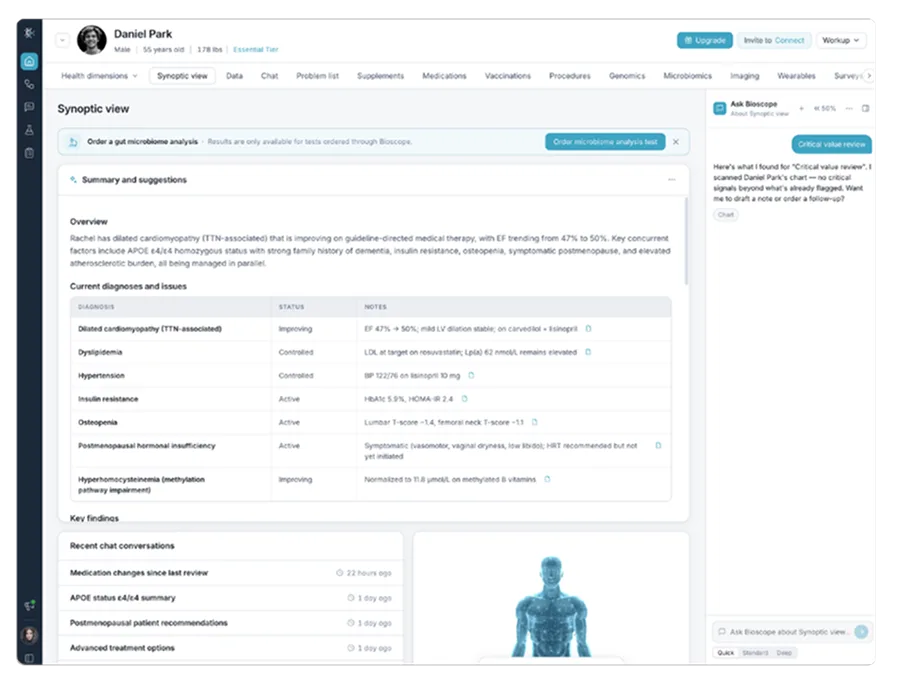
Connect the EHR to the Rest of the Patient Story
Electronic health records contain years of valuable clinical information, but the information physicians need for precision and longevity-focused care often extends beyond the EHR.
Genomic data may live in a separate system. Imaging may be stored elsewhere. Wearable data can sit inside consumer platforms. Microbiome results, longitudinal laboratory data and other specialized testing may arrive through additional reports and portals.
Bioscope.ai is designed to bring these inputs into a connected patient view.
EHR information can sit alongside genomics, labs, imaging, wearables and microbiome data so physicians can review the patient in context rather than reconstructing the story across disconnected sources.
Learn more about the Bioscope platform and how different patient data sources come together.
What Is EHR Integration Software?
EHR integration software connects an electronic health record with another clinical or healthcare technology system so relevant patient information can move into a broader workflow without relying on repeated manual uploads or fragmented review.
The goal is not simply to move data from one system to another.
The greater value comes from making that information useful in context.
For a physician practicing precision medicine, a medical record becomes more informative when it can be considered alongside other patient-specific inputs such as genomic findings, laboratory trends, medications, imaging, microbiome information and wearable signals.
Bioscope.ai uses EHR integration as part of this wider clinical model.
The EHR remains an important source of clinical history. Bioscope.ai extends the picture by connecting that history with additional layers of patient data.
For physicians working with increasingly complex datasets, that connected view can reduce the need to mentally reconstruct the patient record before each clinical interaction.
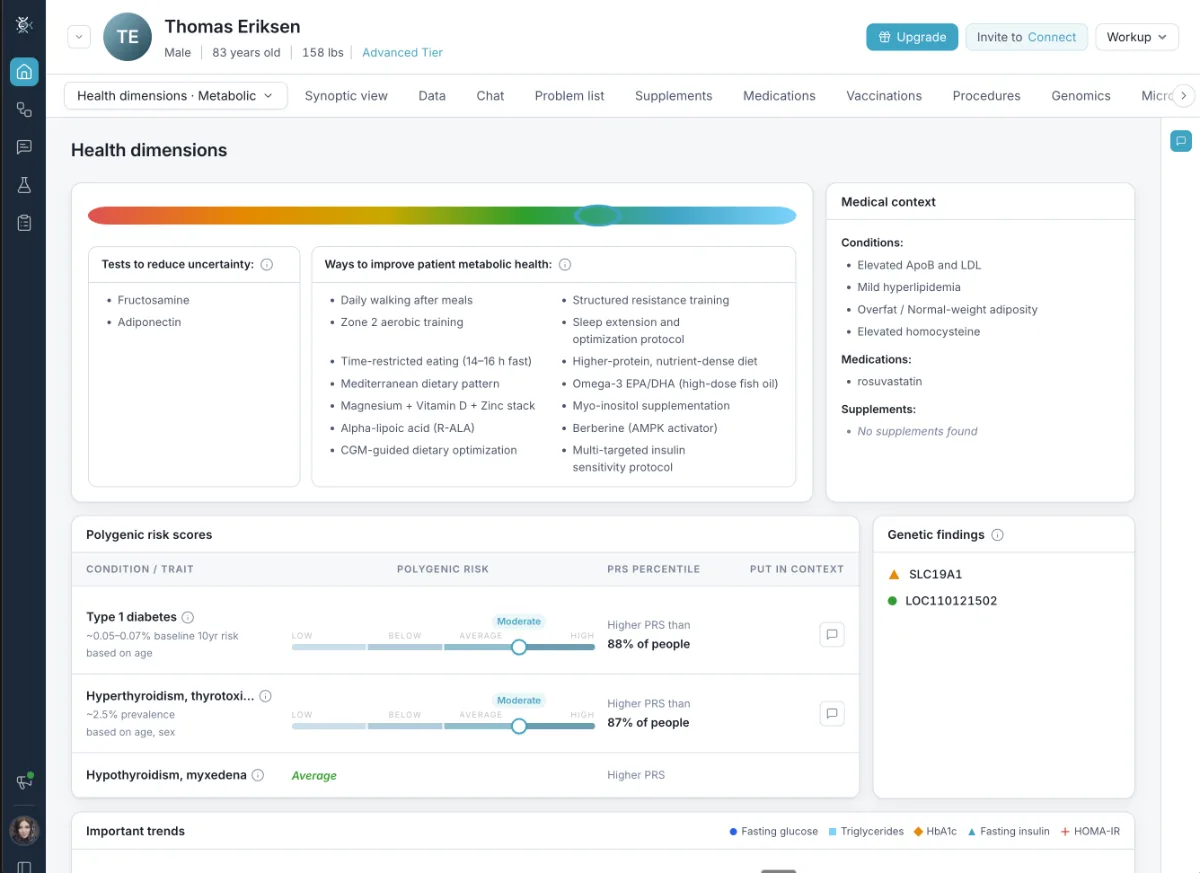
Go Beyond a Standalone Electronic Health Record
An EHR is built to document and manage clinical care.
Precision and longevity medicine can require additional types of information that do not always fit naturally into a conventional medical record.
Bioscope.ai can bring together:
Medical Records and Laboratory History
Clinical records, previous results and longitudinal laboratory information provide the foundation for understanding how the patient's health has changed over time.
Whole-Genome Data
Genomic information adds another layer of patient-specific context that can be reviewed alongside clinical history rather than as an isolated genetic report.
Physicians who need a deeper genomic workflow can also explore Bioscope.ai's genetic testing interpretation software.
Imaging
Imaging findings can be considered alongside laboratory values, medical history and other clinical information instead of remaining disconnected in another portal.
Wearables
Sleep, activity, heart rate, HRV and other supported wearable signals can add information from the time between clinical visits.
Microbiome Data
Microbiome findings can be interpreted alongside medications, symptoms, diet, laboratory findings and the wider medical record.
The result is not simply a larger collection of data. It is a patient record in which different sources can be considered together.
From EHR Data to a More Complete Clinical Context
The challenge in modern clinical care is increasingly not access to information.
It is understanding which information matters for this patient.
A laboratory result may look different when considered against several years of previous values. A genomic finding may become more useful when reviewed with family history, medications and biomarkers. An imaging finding can carry different significance depending on the patient's broader risk profile.
Bioscope.ai is designed around these relationships.
The platform helps physicians bring different types of patient information into a structured clinical view and use AI-supported tools to explore that context while keeping clinical judgment with the physician.
This is also why EHR integration is different from Bioscope.ai's clinical decision support software.
EHR integration connects the information.
Clinical decision support helps physicians work with relevant evidence and patient context once that information is available.
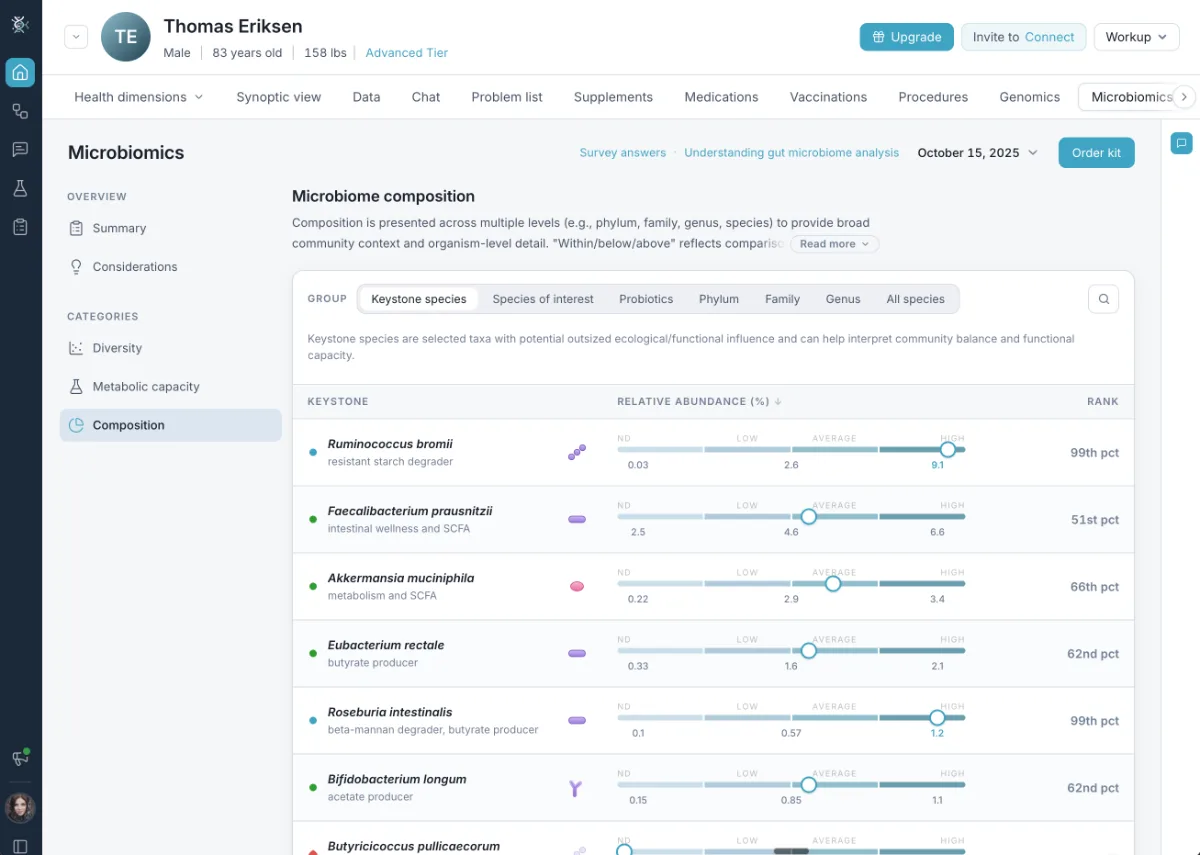
Support the Clinical Workflow Without Replacing It
Good integration should fit the physician's workflow rather than create another disconnected destination.
Bioscope.ai is built as a clinician-facing platform that sits alongside the existing medical record and helps physicians work with complex patient information before, during and after the clinical encounter.
Before a visit, relevant patient history and other data can provide context for review.
During the clinical workflow, physicians can explore the information available within the patient's record and investigate relevant findings.
Over time, incoming information can add to the longitudinal picture rather than starting a new, disconnected record with every interaction.
Bioscope.ai's role is to support that process while keeping the physician in control of interpretation and care decisions.
See how this extends into AI clinical workflow software for physicians.
Schedule a Demo
See how Bioscope.ai can fit alongside your existing clinical workflow and bring EHR data into a broader precision care platform.
Schedule a DemoBuilt for Precision, Longevity and Data-Rich Practices
EHR integration becomes particularly valuable in practices where the amount and variety of patient information extends beyond a conventional encounter-based record.
Bioscope.ai is designed for physician-led practices working with complex, longitudinal patient data.
Precision Medicine
Precision care depends on seeing the individual patient rather than considering every data source separately.
Bioscope.ai's precision medicine software for physicians brings genomics, laboratory information, microbiome data, medications and clinical history into one broader context.
Longevity Medicine
Longevity-focused care often follows biomarkers, imaging, genomic risk, lifestyle data and other health information across years rather than a single visit.
The longevity medicine software workflow is designed around that longitudinal view.
Integrative Medicine
Integrative medicine can involve multiple data sources across lifestyle, laboratory testing, medical history and other clinical inputs.
Bioscope.ai's integrative medicine software helps physicians review these inputs together.
Concierge Medicine
Concierge practices often work with patients over longer periods and may receive more testing and monitoring data than conventional workflows are designed to synthesize.
Bioscope.ai's concierge medicine software provides a connected environment for that deeper patient context.
Keep the Physician at the Center
Connecting more data does not mean software should make clinical decisions independently.
Bioscope.ai is physician-founded and designed around physician-led care.
The platform can help organize patient information, surface relevant context and provide AI-supported analysis, but the physician remains responsible for interpretation and clinical decisions.
That distinction matters when EHR information is combined with genomics, imaging, biomarkers, microbiome data and other complex sources.
More data can create more possibilities for interpretation.
The objective is therefore not simply to maximize the amount of information available.
It is to help the physician understand that information within the context of the individual patient.
Bioscope.ai's connected approach is designed to make that process clearer while keeping the art and practice of medicine with the clinician.
Explore the Platform
Learn how Bioscope.ai connects genomics, labs, imaging, wearables and microbiome data into one physician-led patient view.
Schedule a Personalized DemoEHR Integration as Part of a Longitudinal Patient Record
Patient data does not stop changing after an EHR connection is established.
New laboratory results arrive. Imaging is added. Wearable signals accumulate. Medications change. New research may change how existing genomic findings are understood.
Bioscope.ai is designed around a patient record that can continue to develop over time.
That longitudinal model matters because clinical meaning often depends on change.
A single laboratory value is a snapshot.
Several years of results can reveal a pattern.
One imaging study provides structural information at a particular moment.
Later imaging can show whether a finding remained stable or changed.
A genomic sequence does not change, but the scientific understanding of genetic variants can.
Connecting EHR information with these other sources gives physicians a broader foundation for following the patient over time.
Bring Your Existing Clinical Data Into a Broader Precision Care Workflow
Your EHR should not have to contain every type of data for that information to contribute to the patient picture.
Bioscope.ai connects electronic health record information with other relevant clinical and biological data to help physicians work from a more complete view of the patient.
The platform is built for practices that want to combine the medical record with deeper patient context while keeping physicians responsible for the decisions that follow.
Schedule a Demo
See how Bioscope.ai can fit alongside your existing clinical workflow and bring EHR data into a broader precision care platform.